
For many engineering organizations, the question is no longer whether they need better control of engineering information—it is whether they can afford to continue operating without it.
Engineering drawings, P&IDs, specifications, SOPs, equipment manuals, and project documentation are the foundation of safe and efficient operations. Yet in many organizations, this information remains scattered across shared drives, email, SharePoint, and disconnected business systems. The result is wasted engineering time, delayed projects, increased compliance risk, and costly operational mistakes.
Building a strong business case for an engineering document management system (EDMS) means connecting these everyday challenges to the financial and strategic outcomes leadership cares about.

Leadership Doesn't Buy Software—They Buy Business Outcomes
Executives rarely approve technology investments because they offer better document control. They invest when they clearly understand how a solution will reduce costs, mitigate risk, improve operational performance, or accelerate strategic initiatives. An effective EDMS business case should focus on outcomes such as:
- Reducing engineering inefficiencies
- Lowering operational and compliance risk
- Accelerating capital project delivery
- Improving audit readiness
- Enabling AI and digital transformation initiatives
The conversation shifts from "we need better document management" to "here's how this investment will improve productivity, reduce risk, and generate measurable ROI."
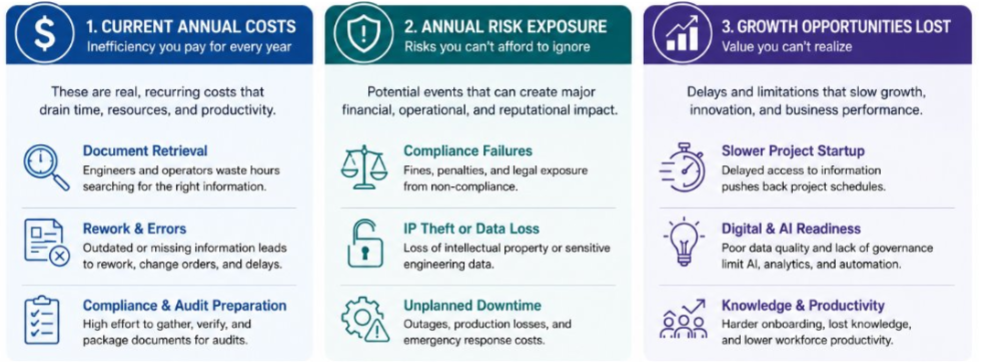
Start by Understanding the Cost of Doing Nothing
One of the most effective ways to justify an EDMS investment is to calculate the current cost of inefficient engineering information management. Start by establishing a baseline using questions such as:
- How many employees access engineering documents every day?
- How much time is spent searching for or verifying engineering information?
- What percentage of engineering rework results from outdated or missing documentation?
- How much effort is required each year to prepare for audits?
- What is the cost of unplanned downtime or project delays caused by inaccurate engineering information?
Many organizations discover that seemingly minor inefficiencies accumulate into millions of dollars of annual cost. Even conservative estimates often reveal that the cost of maintaining the status quo exceeds the investment required for an EDMS.
Where EDMS Delivers Financial Value
The return on investment from an EDMS comes from multiple areas across the organization.
- Reduce Engineering Productivity Losses. Engineering Professionals spend a surprising amount of time locating, validating, and recreating information that should already exist. By providing a centralized, searchable repository with version control and approval workflows, an EDMS significantly reduces time spent searching for documents and increases engineering productivity.
- Accelerate Capital Projects. Engineering projects frequently slow down when teams are working from inconsistent documentation or waiting for approvals. An EDMS streamlines reviews, improves collaboration, and ensures every stakeholder is working from current information. Even modest improvements in project execution can accelerate startup and reduce costly change orders.
- Reduce Operational Risk. Outdated engineering documentation can contribute to equipment failures, maintenance errors, and operational disruptions. An EDMS helps ensure that maintenance personnel, operators, and engineers always have access to approved, current documentation, reducing the likelihood of costly mistakes.
- Improve Compliance. Highly regulated industries face increasing documentation requirements during audits and inspections. Maintaining complete document histories, revision tracking, electronic approvals, and controlled access helps organizations reduce audit preparation time while lowering compliance risk.
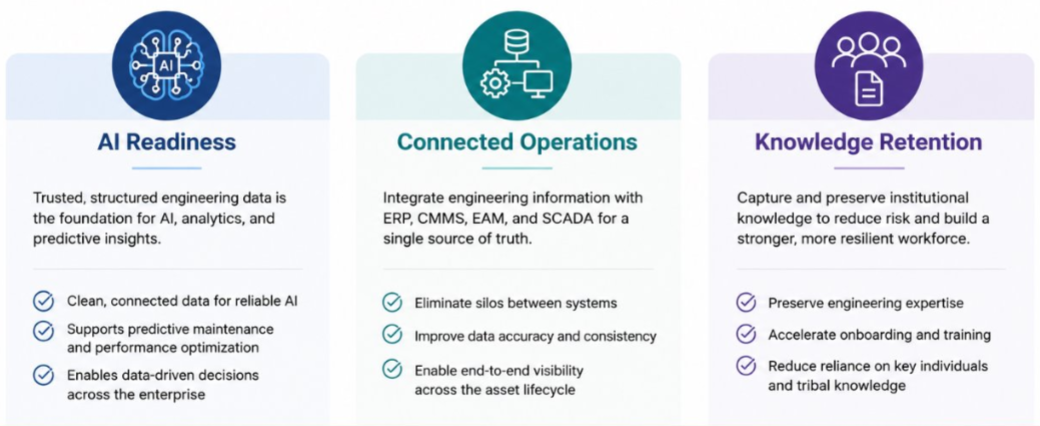
- Protect Engineering Knowledge. As experienced engineers retire, organizations risk losing decades of institutional knowledge. An EDMS captures engineering documentation, procedures, and project history in a structured, searchable environment, making critical knowledge accessible to future employees while reducing onboarding time.
Think Beyond Immediate ROI
While productivity improvements often justify the investment on their own, the strategic value of an EDMS extends much further. Modern digital initiatives—including AI, predictive maintenance, digital twins, and connected systems (ERP, CMMS, MES, and SCADA)—depend on accurate, current, trusted engineering information.
Today’s investments in improving document management become the governed data foundation required for tomorrow's intelligent operations.
What Makes a Strong Business Case?
Your EDMS proposal should speak to language important to the executive, including financial analysis with strategic alignment.
- Expected annual savings and NPV
- Estimated payback period
- Return on investment (ROI)
- Reduced operational and compliance risk
- Alignment with organizational digital transformation goals
The Bottom Line
Organizations that can clearly quantify the cost of doing nothing—and the financial impact of improving engineering information management—are far more likely to secure executive approval. The strongest EDMS business cases are not about document control. They're about improving productivity, reducing risk, accelerating projects, and building the trusted information foundation that supports AI and digital transformation.
Learn about other tips for building a business case for EDMS in the Engineering Leader’s Guide to EDMS for Asset-Intensive Industries.